#storm-damage-roof-repair-pittsburgh-what-to-do-immediately-after-a-storm
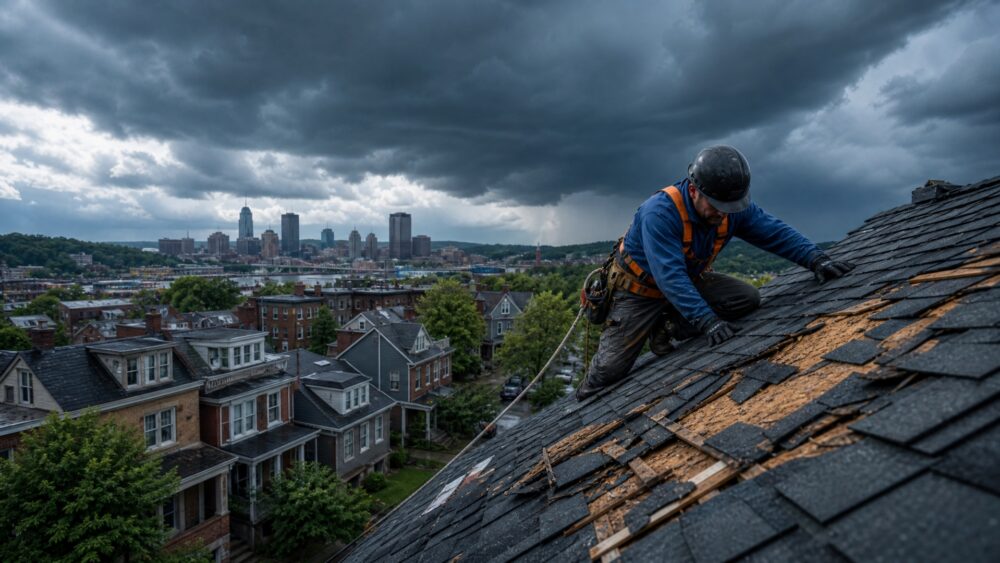
The storm has passed, but your roof took a beating. Standing in your driveway in Cranberry Township or Bethel Park, you’re staring up at missing shingles, dented gutters, or worse, a tarp-worthy hole. Your phone is already ringing with contractors who somehow got your number before the winds even died down.
Here’s the hard truth: the next 24-48 hours will determine whether you get your roof properly fixed or become another horror story about storm chasers who disappear with your money. Pittsburgh homeowners face this reality every storm season, and knowing what to do right now can save you thousands of dollars and months of headaches.
Your First Hour: Safety and Immediate Protection
Check for Immediate Dangers
Before you do anything else, make sure your home is safe. Look for:
- Sagging ceiling areas that could collapse
- Water actively pouring through the roof
- Exposed electrical wires or outlets near water damage
- Structural damage to walls or support beams
If you spot any of these issues, get your family out and call emergency services. Your roof can wait, your safety can’t.
Document Everything Before It Gets Worse
Grab your phone and start taking photos. You’ll need these for insurance claims, contractor estimates, and your own records. Take pictures of:
- Exterior damage from multiple angles, missing shingles, dented gutters, damaged flashing
- Interior water damage, stains on ceilings, walls, floors, and personal property
- Close-ups of specific damage, cracked shingles, exposed underlayment, bent metal work
- Wide shots showing your entire roof, these help establish the scope of damage
Don’t just snap a few quick shots. Take 20-30 photos minimum. Insurance adjusters and contractors will thank you later.
Stop Water Damage in Its Tracks
If water is getting inside your home, you need to act fast. Every hour of active leaking means more damage to insulation, drywall, flooring, and personal belongings.
For minor leaks:
- Place buckets or tarps to catch dripping water
- Move furniture and valuables away from affected areas
- Use fans to increase air circulation and prevent mold
For major roof openings:
- Call a professional immediately, this isn’t a DIY job
- If you can safely access the area, place a tarp over the damaged section from the outside
- Secure the tarp with 2×4 boards, not just nails that can tear through
Hour 2-6: Call Your Insurance Company
Report the Claim Immediately
Most insurance companies have 24/7 claim reporting. Call them before you call contractors. Here’s why:
- Time limits matter, some policies require reporting within 24-48 hours
- Early documentation helps, adjusters prefer fresh damage photos over week-old evidence
- Coverage questions get answered, you’ll know what’s covered before getting estimates
When you call, have your policy number ready and be prepared to describe:
- When the storm occurred
- What type of damage you see
- Whether you’ve made temporary repairs
- If the home is currently livable
Ask the Right Questions
Don’t just report and hang up. Get clarity on your coverage:
- “What’s my deductible for wind/hail damage?”
- “Do I need multiple contractor estimates?”
- “Will you send an adjuster, or do I need to get my own estimates first?”
- “What temporary repairs are covered while I wait for permanent fixes?”
- “How long do I have to complete repairs once the claim is approved?”
Keep Detailed Records
Start a storm damage file with:
- Your claim number and adjuster contact information
- All photos and videos you’ve taken
- Receipts for any emergency repairs or temporary housing
- Notes from every phone conversation with your insurance company
Day 1-2: Choosing the Right Contractor (This Is Where Most People Get Burned)
Red Flags That Should Send You Running
Storm chasers flood Pittsburgh neighborhoods after every major weather event. They prey on homeowners who are stressed, overwhelmed, and desperate for help. Watch out for contractors who:
- Show up at your door uninvited, legitimate contractors don’t need to knock on doors to find work
- Demand payment upfront, never pay the full amount before work starts
- Offer to waive your insurance deductible, this is insurance fraud and can void your claim
- Pressure you to sign immediately, “this price is only good today” is a classic scam line
- Can’t provide local references, if they just rolled into town, how can they stand behind their work?
- Quote significantly lower than everyone else, they’re either cutting corners or planning to add charges later
What Legitimate Emergency Roof Repair Looks Like
When you call a reputable contractor like Buccos Roofing, here’s what you should expect:
Immediate Response: We answer our phones 24/7 during storm season. Real emergencies get same-day service calls.
Professional Assessment: Our crews arrive with proper equipment, insurance documentation, and company uniforms. We’ll inspect your roof safely and thoroughly.
Clear Communication: You get a written estimate that breaks down materials, labor, and timeline. No surprises, no pressure tactics.
Insurance Coordination: We work directly with your adjuster when needed and help document damage properly for your claim.
Questions to Ask Every Contractor
Before you let anyone on your roof, ask:
- “Can I see your Pennsylvania contractor’s license and current insurance certificates?”
- “Do you have local references from jobs completed in the last year?”
- “What’s your warranty on workmanship, and how long have you been in business to honor it?”
- “Will you provide a detailed written estimate before starting any work?”
- “How do you handle change orders if additional damage is discovered?”
Week 1: Working with Your Insurance Adjuster
Prepare for the Adjuster Visit
Your insurance adjuster will schedule a time to inspect your roof and assess the damage. This meeting can make or break your claim, so be prepared:
Be present during the inspection, don’t just hand over the keys and leave. You want to hear their assessment firsthand and point out any damage they might miss.
Bring your photos, show them pictures you took immediately after the storm. Damage can be harder to spot days later, especially if you’ve had additional rain.
Ask questions, “What damage do you see that’s covered?” “What isn’t covered and why?” “How did you calculate the repair estimate?”
Understanding Your Estimate
Insurance estimates can be confusing. Here’s what to look for:
Line items should match actual damage, if your gutters are dented, that should be a separate line item from roof shingles.
Material specifications matter, make sure the estimate specifies the same quality materials you currently have (or better).
Labor rates should reflect local costs, Pittsburgh labor costs differ from rural Pennsylvania. Your contractor should be able to work within the insurance estimate or explain why additional costs are necessary.
When Estimates Don’t Match
It’s common for contractor estimates to differ from insurance estimates. This doesn’t mean someone is wrong, they’re just looking at different things:
Insurance adjusters focus on what’s covered under your policy and use standardized pricing.
Contractors see the actual work required and price according to current local costs and material availability.
If there’s a significant gap, ask both parties to explain the difference. Sometimes it’s as simple as the adjuster missing damage that the contractor found during a more detailed inspection.
Week 2-4: Getting the Work Done Right
Scheduling Emergency vs. Permanent Repairs
Not all storm damage requires immediate roof replacement. Here’s how to prioritize:
Emergency repairs (do within 48 hours):
- Active leaks causing interior damage
- Large holes or missing sections of roof
- Damaged flashing around chimneys or vents
- Loose shingles that could blow off and cause more damage
Permanent repairs (can wait 2-4 weeks):
- Cosmetic damage that doesn’t affect weather protection
- Gutter replacement or repair
- Shingle replacement in areas that aren’t currently leaking
Material Considerations for Storm Repairs
Storm season isn’t the time to upgrade your entire roof unless it’s severely damaged. Focus on:
Matching existing materials, this ensures your insurance claim gets approved and your roof looks consistent.
Quality over speed, cheap materials installed quickly often fail during the next storm season.
Manufacturer warranties, make sure repair materials don’t void your existing roof warranty.
Working with Established Local Contractors
There’s a reason Buccos Roofing has completed over 5,000 projects across Pennsylvania and West Virginia since 2012. When storms hit, you want a contractor who:
- Will be here next year to honor warranties
- Knows local building codes and permit requirements
- Has relationships with suppliers to get materials quickly
- Carries proper insurance to protect your property during repairs
Our 10-year craftsmanship warranty means something because we’ve been in business long enough to stand behind it. When storm chasers promise the same thing, ask yourself: where will they be in 10 years?
Red Tape: Permits and Inspections
When You Need Permits
Most storm damage repairs in Pittsburgh require permits, especially if you’re:
- Replacing more than 25% of your roof surface
- Doing structural repairs to trusses or decking
- Replacing gutters or adding new drainage systems
- Making any changes to roof lines or ventilation
Working with Local Building Departments
Each municipality around Pittsburgh has different requirements:
Cranberry Township requires permits for most roofing work and has specific requirements for wind-resistant materials.
Bethel Park focuses on proper drainage and has strict guidelines for gutter installations.
Monroeville requires detailed plans for any structural repairs.
Your contractor should handle permit applications and scheduling inspections. If they suggest skipping permits to “save time and money,” find a different contractor.
The Money Side: Financing Storm Repairs
Insurance Claim Payments
Understanding how insurance payments work prevents cash flow problems:
Actual Cash Value (ACV) policies pay depreciated value upfront, then recoverable depreciation after work is completed.
Replacement Cost Value (RCV) policies pay full replacement cost but often in two payments, one upfront and one after completion.
Your deductible comes out of the first payment, so plan accordingly.
When Insurance Isn’t Enough
Sometimes storm damage exceeds your coverage limits or includes items that aren’t covered. Options include:
Financing through your contractor, many established contractors offer payment plans for the portion insurance doesn’t cover.
Home equity loans, often have lower interest rates than personal loans for large repair projects.
Emergency repair funds, some municipalities offer low-interest loans for storm damage repairs.
Prevention: Preparing for Next Time
Immediate Post-Repair Maintenance
Once your storm repairs are complete, take steps to prevent future damage:
Schedule annual inspections, catch small problems before they become storm vulnerabilities.
Keep gutters clean, clogged gutters cause water backup that can damage roof edges during storms.
Trim overhanging branches, they become projectiles in high winds.
Document your repairs, keep photos and receipts for insurance and warranty purposes.
Upgrading for Storm Resistance
If you’re doing major repairs anyway, consider upgrades that reduce future storm damage:
Impact-resistant shingles, many insurance companies offer discounts for Class 4 rated materials.
Improved flashing, better materials and installation techniques prevent wind-driven rain infiltration.
Gutter guards, reduce maintenance and prevent overflow during heavy rains.
When to Call for Help
Don’t wait until the next storm to address roof problems. Call Buccos Roofing at (724) 554-6224 if you notice:
- Loose or missing shingles
- Granules collecting in gutters
- Daylight visible through roof boards
- Water stains on interior ceilings
- Sagging roof lines
We provide free estimates and can often identify potential problems before they become emergency repairs.
Your Next Steps
Storm damage is stressful, but you don’t have to navigate it alone. Here’s your action plan:
- Ensure immediate safety and document all damage with photos
- Call your insurance company within 24 hours to report the claim
- Get estimates from local, licensed contractors, avoid door-to-door storm chasers
- Work with your adjuster to ensure all damage is properly documented
- Choose a contractor with local references and proper insurance coverage
Remember: the cheapest estimate often becomes the most expensive mistake. Your roof protects everything you own. Make sure the contractor you choose can protect that investment with quality work and a warranty they’ll be around to honor.
For emergency storm damage repair in Pittsburgh, Cranberry Township, Bethel Park, or anywhere across Pennsylvania and West Virginia, Buccos Roofing provides 24/7 response with the experience of over 5,000 completed projects since 2012. Learn more at buccosroofing.com or call (724) 554-6224 for your free estimate.